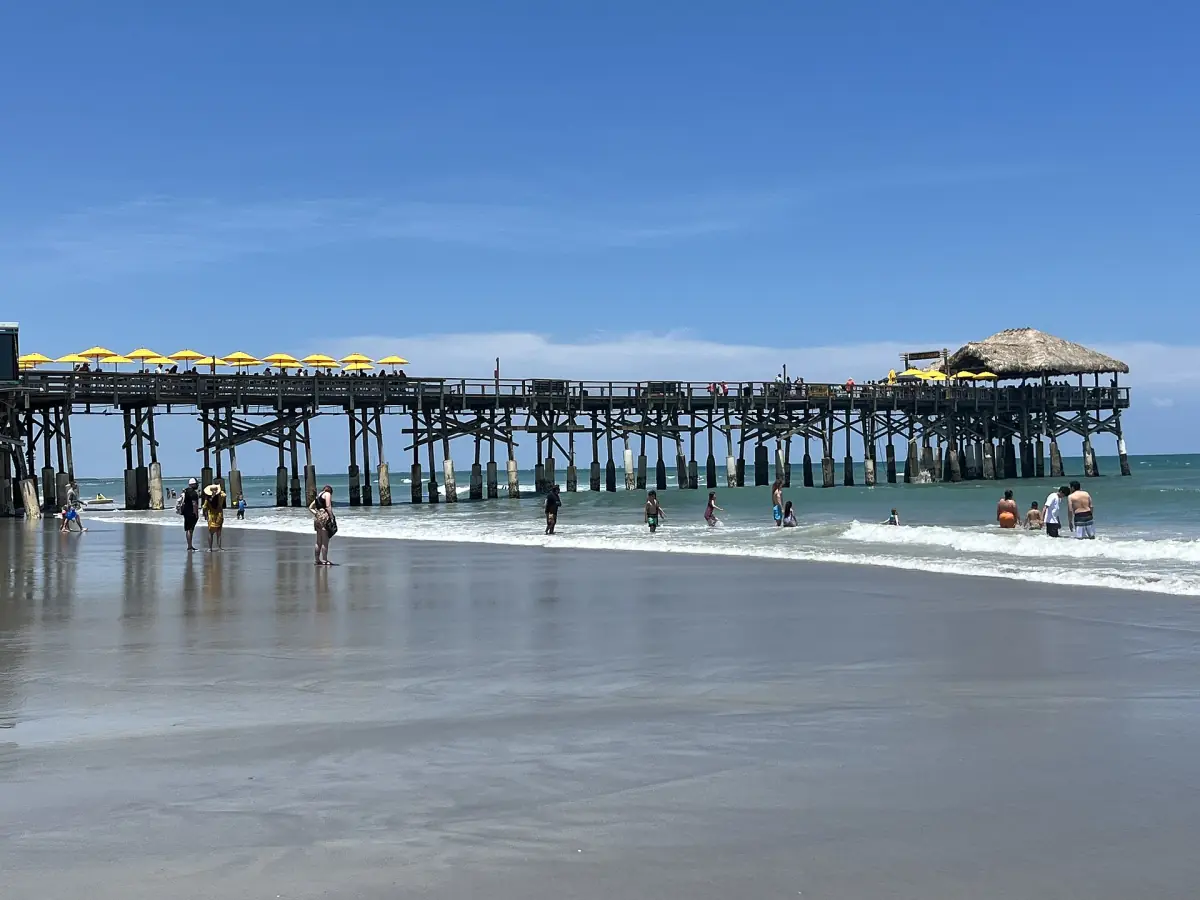
Cocoa Beach Pier and the beach access choices
Cocoa Beach Pier is one landmark within a wider Atlantic beachfront. Cocoa Beach lies between the ocean and Banana River, and the city describes street-end accesses east of A1A alongside larger beach parks. Choose a crossing according to the facilities you need and how you are arriving. A park with showers and picnic space supports a different visit from a short walk through a street-end access.
The pier is privately operated, with shops and places to eat. It is a separate destination from the surrounding sand and the city-managed parking areas. For a first beach day, start with access and conditions rather than treating the pier, a park and every nearby parking space as one facility. The parking guide explains the payment systems, while the arrival guide covers the journey into Cocoa Beach.
Lori Wilson Park for facilities beside the beach
Lori Wilson Park has toilets, outdoor showers, picnic areas, a playground, a nature boardwalk through coastal woodland and a fenced dog exercise area. Parking is free. The county lists six beach crossings, including four ADA-accessible crossings. These facilities make it a practical place to consider when your party wants more than a quick look at the ocean.
The park closes at dusk. Use the marked crossings and look at conditions on arrival. A fenced dog exercise area serves a different purpose from beach access, so follow the local dog rules for the sand. If swimming is part of your plan, choose a station that is staffed when you visit and speak to the lifeguard about the water. Keep the route back to your vehicle in mind when deciding how long to stay.

Surfing near the pier
This lesson includes an instructor and a surfboard near the pier.
Hand-picked tours, booked through Viator. Prices are indicative starting prices in US dollars (as of October 2026). Tap a tour for live availability and the current price in your currency.

A surf lesson beside the pier
The one-hour lesson meets on the south side of the pier and includes an instructor and surfboard. Use it for time learning in the surf, with your own journey to the meeting point.
Shepard, Fischer and the street-end crossings
Alan Shepard Park and Sidney Fischer Park are city parks; Lori Wilson is managed by the county. Street-end crossings give further access through the dunes. Keep those management differences in mind when paying for parking. The city tariff retrieved on 7 November 2026 is 6 USD per hour, with a one-hour minimum, or 25 USD per day, plus a 0.35 USD app fee. Enforcement runs from 7 am to 7 pm, every day of the week.
Pay as soon as you park and use the correct zone and space number. Overnight parking is prohibited on city-managed areas. Free parking at Lori Wilson is a separate arrangement, while pier parking has its own terms. Choose a beach access that works for your intended stay, then read the signs at that location rather than transferring one area's tariff to another.
Shopping and time on the pier
The pier extends about 800 feet from the beach and combines a walkway with shopping and dining. It can provide a different focus from sitting on the sand. Look at the entrance information for the day's access arrangements and operating hours. Keep restaurant hours separate from the availability of the whole pier when planning an evening visit.
The pier's rules exclude pets, bicycles, surfboards and drones on the pier and the relevant operator property. Jumping or diving from the pier is prohibited. Arrange your beach equipment around those boundaries before walking onto the structure. If you want a surf lesson, the one-hour activity meets at the rental tent south of the pier, outside the blue doors underneath. Instructor and surfboard are included; the activity is surf tuition. The surf lesson guide compares the lesson formats.
Warning flags before swimming or surfing
Double red means the water is closed to the public. With a red flag, the city advises staying out because of dangerous surf and strong currents. Yellow indicates medium hazard, green low hazard with continued caution, and purple warns of dangerous marine life. Read the flags at your access and pay attention to the people managing that stretch of beach.
If caught in a rip current, avoid fighting straight against it. Float or tread water, then move parallel to the shore as the pull eases before heading back. Wave and call if you need help. Someone on land should contact a lifeguard or call 911 rather than entering the water to attempt a rescue. At thunder or lightning, leave the beach and seek shelter. Our weather guide explains climate context separately from the conditions on your visit.
Protect dunes and nesting wildlife
Stay off the dunes and use the boardwalk crossings. The city's turtle season runs from 1 March to 31 October: leave turtles, hatchlings and nests undisturbed, avoid bright lights and flash photography, and keep the route to the sea clear. Remove beach equipment and fill holes before leaving. Glass containers, fireworks and overnight camping are prohibited. These small decisions help keep your beach visit compatible with wildlife and the next visitors.
Beach and pier questions
Where can I park free for a beach visit?
Lori Wilson Park has free parking. City-managed beach parking uses its own tariff, and the pier has separate arrangements.
Does a green flag remove the need for caution?
Green means low hazard, with continued caution. Look at the actual conditions and choose a staffed station for advice.
Can I bring a surfboard onto the pier?
The operator prohibits surfboards on the pier and relevant property. Plan surf equipment around that boundary and follow your lesson's meeting instructions.